
When winter hits hard, commercial buildings face a long list of cold-weather challenges. Icy sidewalks, frozen pipes, draft complaints, rising energy bills — the season can turn small issues into expensive ones fast.
But one winter protection feature often gets overlooked: the snow hood for commercial HVAC units.
It may not be the flashiest part of a heating and ventilation system, but a snow hood plays a major role in protecting rooftop and outdoor HVAC equipment from snow, ice, and wind-driven precipitation. For facility managers, building owners, and property maintenance teams, that means better performance, fewer service calls, less chance of costly HVAC unit damage, and less risk of problems when temperatures drop.
What Is a Snow Hood on an HVAC Unit?
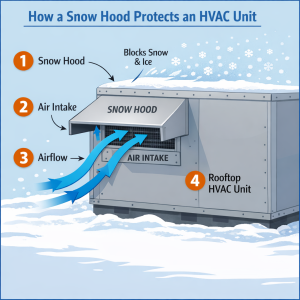
A snow hood is a protective cover installed on top of an HVAC unit and/or over the air intake or exhaust openings. Its job is simple but important: help prevent snow, ice, and debris from falling on or entering the unit while still allowing proper airflow.
In commercial settings, snow hoods are commonly used on:
- VRF and Other Heat Pump Condensers that run year round
- Rooftop HVAC units
- Makeup air units
- Packaged heating and cooling systems
- Ventilation equipment
- Outdoor air intakes and exhausts
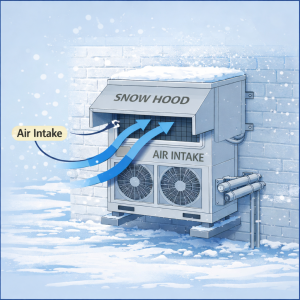
Think of a snow hood like a baseball cap for your HVAC unit. It lets the system “breathe” but keeps snow from dumping straight into its “face.”
Why Commercial Buildings Need Snow Hoods
Commercial buildings have more at stake than a small comfort issue. When HVAC systems struggle, it can affect employees, tenants, customers, equipment, and even compliance requirements. Commercial buildings also tend to have higher and larger roofs that collect large quantities of snow. As snow starts to melt, it can fall off in large heavy chunks capable of crushing whatever it lands on, including your nice new HVAC unit!
Here are the biggest benefits of installing snow hoods for commercial HVAC systems.
1. Protects HVAC Equipment from Snow Infiltration
One of the main purposes of a snow hood is to stop blowing snow from entering the unit. Without that protection, snow can collect inside intake openings, freeze on internal components, and interfere with operation. For commercial buildings, that can lead to:
- Restricted airflow
- Frozen coils
- Damaged filters
- Sensor malfunctions
- Unexpected shutdowns
A snow hood adds a critical layer of defense, especially for buildings in regions with frequent storms, falling or drifting snow, or strong winter winds.
2. Helps Maintain Reliable Airflow in Winter
HVAC performance depends on consistent airflow. When snow blocks intakes or exhaust paths, the system has to work harder to move air. That extra strain can reduce efficiency and create uneven heating throughout the building. By helping keep openings clear, commercial HVAC snow hoods support steadier airflow when conditions are at their worst.
3. Reduces the Risk of Costly Downtime
No building manager wants to deal with a heating issue during a snowstorm. Emergency calls are expensive, tenant frustration grows quickly, and downtime can disrupt operations across the property.
4. Supports Better Energy Efficiency
When an HVAC unit is obstructed by snow or forced to operate under poor intake conditions, it often uses more energy to deliver less performance. That inefficiency adds up over a long winter. With a simple low cost snow hood, your unit has:
- Less strain on the system
- More consistent heating performance
- Reduced energy waste
- Better seasonal efficiency
5. Helps Extend Equipment Life
Commercial HVAC equipment is a major investment. Anything that helps reduce unnecessary stress can contribute to longer service life. Snow intrusion, moisture exposure, freeze-thaw cycles, and airflow restrictions can all take a toll on components over time. A snow hood helps minimize those winter impacts. That can mean fewer repairs, less premature wear, and better long-term value from your HVAC system. For owners and operators managing capital budgets, preventive protection often makes a lot more sense than reactive replacement.
6. Can Help Reduce Maintenance Headaches
No one enjoys sending maintenance personnel into snowy and icy conditions to deal with preventable issues. By helping keep snow out of key system openings, snow hoods may reduce the frequency of winter maintenance related to blockages, icing, and airflow problems. That can help maintenance teams spend less time reacting and more time focusing on planned service.
What to Look for in a Commercial HVAC Snow Hood
Not all snow hoods are the same. A poorly fitted hood can interfere with performance, so it is important to choose a design intended for the specific unit and application. When choosing one for a commercial building, consider:
- Compatibility with the HVAC unit
- Airflow requirements
- Weather resistance and material durability
- Proper sizing and installation
- Local climate conditions
Final Thoughts
A snow hood is a minor investment that can play an important role in protecting commercial HVAC units from avoidable problems. For building owners, facility managers, and maintenance teams, the benefits are clear: better protection, better performance, and fewer winter surprises. If your commercial property uses outdoor HVAC equipment, adding snow hoods can be a practical step toward a more reliable cold-weather operation. Because when snow starts flying, your HVAC system should be focused on heating the building — not fighting the weather.
Give us a call at 508-763-3738 or email info@advanceair.net today to learn more.