
In commercial facilities, HVAC performance isn’t just about comfort—it directly impacts operations, energy costs, and equipment longevity. During winter months, one often-overlooked risk is snow and ice accumulation on outdoor heat pump condensers.
Failing to manage this can lead to reduced system performance, unplanned downtime, and avoidable expenses. Here’s why proactive snow removal should be part of every facility’s winter maintenance plan.
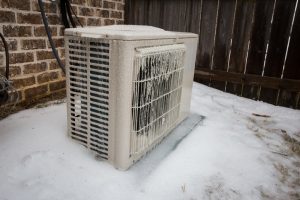
Snow and Ice Increase Risk of Equipment Failure
Accumulated snow can melt and refreeze, forming ice on coils, fans, and other critical components. In commercial systems, this can lead to:
- Damaged fan assemblies
- Coil deformation or rupture
- Compressor stress and premature failure
Given the size and cost of commercial HVAC equipment, these failures often result in significant repair or replacement expenses—not to mention operational downtime.
Operational Continuity Depends on Airflow
Commercial heat pumps rely on consistent airflow to transfer heat efficiently. Snow buildup around condenser units restricts that airflow, forcing systems to work harder to meet demand.
In large buildings, this can quickly lead to:
- Inconsistent indoor temperatures across zones
- Increased runtime and system strain
- Difficulty maintaining setpoints during peak hours
For facilities like offices, healthcare environments, and retail spaces, these disruptions can affect occupant comfort and business operations.

Reduced Efficiency Drives Up Operating Costs
When airflow is restricted, heat pumps lose efficiency and may engage supplemental heating systems—often electric heat or auxiliary systems that consume significantly more energy.
For commercial properties, this translates to:
- Higher utility bills across large square footage
- Reduced ROI on high-efficiency HVAC systems
- Increased carbon footprint and sustainability setbacks
Even partial obstruction can have a measurable financial impact at scale.
Downtime Has Business Consequences
Unlike residential settings, HVAC downtime in commercial environments can interrupt business continuity. Depending on the facility, this may result in:
- Lost revenue (retail, hospitality)
- Compromised working conditions (offices, warehouses)
- Compliance risks (healthcare, laboratories)
Emergency service calls during winter storms are also more expensive and harder to schedule, compounding the issue.
Snow Management Should Be Built Into Maintenance Protocols
To mitigate risk, facilities teams should coordinate with snow removal vendors to include HVAC equipment zones as part of their winter operations plan:
- Routine clearing after storms to maintain proper airflow
- Maintain 18–36 inches of clearance around all units (or per manufacturer specs)
- Inspect for ice buildup and address early
- Train maintenance staff on safe removal practices to avoid coil damage
Design Considerations for Long-Term Protection
For new installations or retrofits, consider:
- Elevated mounting platforms above expected snow levels
- Wind baffles or snow hoods designed for commercial units
- Strategic placement to reduce exposure to drifting and plowing
These proactive measures can significantly reduce maintenance demands and risk over the system’s lifespan.
The Bottom Line
In commercial settings, neglecting snow buildup on heat pump condensers isn’t just a maintenance oversight—it’s a financial and operational risk.
A simple, consistent snow management strategy can:
- Protect high-value equipment
- Maintain system efficiency
- Prevent costly downtime
For facility managers and building owners, it’s a small investment of time that delivers substantial returns throughout the winter season. If your facility has experienced performance issues during winter, it may be time to evaluate how snow and ice are impacting your HVAC systems—and whether your current maintenance plan is doing enough to address it.
Give us a call at 508-763-3738 or email info@advanceair.net today to learn more.