
If you’re from New England you are probably familiar with furnaces (which blow hot air) or boilers (which circulate hot water) for your heat. In the last several years, there’s been a huge push to replace these traditional fossil fuel-based systems for heat pumps, which use electricity for heating, not fossil fuels. There’s a lot of debate, especially in the Northeast about heat pumps about how well they work especially in super cold winters, but one thing is for sure. They work DIFFERENTLY, so it’s important to know the differences before you have one installed. Content provided in part by https://www.usheatpumpsummit.com/
1. Heat Pumps Both Heat and Cool
Despite the name, heat pumps are capable of both heat and cooling. In fact, they use the same process, but in reverse. In AC mode, a heat pump absorbs heat from inside and distributes it outside. In heat mode, it removes heat from outside and brings it in. Sounds weird, right? In winter, it’s COLD outside, so it’s a bit of a mind-bender. The short story is that what is cold to YOU, is actually warm to refrigerant. In really cold weather, the system is helped out by adding fancy controls that give it a boost.
2. “Blowing Cold Air” During Heating Is Normal (Defrost Mode)
One of the most common service calls we see is: “My heat pump is blowing cold air—something’s wrong.” In most cases, nothing is wrong. When outdoor temperatures hover around freezing, frost builds up on the outdoor coil. To fix this, the system enters defrost mode, temporarily switching into cooling to melt the ice.
What to expect:
- Cool or lukewarm air from vents for a short period
- Steam or mist from the outdoor unit
- Cycle duration of about 5–15 minutes
This is a normal part of heat pump operation and usually does not impact indoor comfort.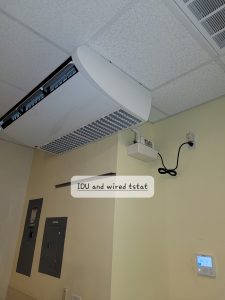
3. The Fan Runs More Frequently Than a Furnace
With a furnace, the system shuts off completely once the setpoint is reached. With a heat pump:
- The indoor fan may run continuously
- Air is constantly circulated across sensors to maintain precise temperature control
- Energy usage during this phase is minimal
For facility managers, this often raises concerns about runtime—but it’s actually part of how high-efficiency heat pump systems maintain consistent temperatures.
4. Some Operational Noise Is Expected
In commercial buildings, furnaces and boilers are typically isolated in mechanical rooms.
Heat pumps—especially ductless or VRF systems—often have indoor units located in occupied spaces.
Normal sounds may include:
- Low humming
- Air movement (“whooshing”)
- Expansion/contraction noises
These are not signs of system failure, but part of standard operation.
5. Snow Storms Mean Shoveling out Your Heat Pump
In order for your heat pump to keep working, you MUST keep it clear of snow and ice. It will not work if it doesn’t have proper air flow around the outdoor condenser. For more info on this, visit our other blog, Why Proper Snow Removal is Critical.
6. Thermostat Setback is a No-No
You’ve heard the old adage, “Slow and stead wins the race”? That’s how heat pumps work best. With furnaces, you can reduce the setpoint on the thermostat when the building is not occupied (thermostat setback) and quickly recover temperatures when you turn up the thermostat – it saves money on your electric bill with no sacrifice of comfort. Heat pumps can’t “bounce back” quickly or easily from a setback. Heat pumps like to lumber – slowly and efficiently maintaining temperature setpoint – like the tortoise. Expecting the tortoise to run like a hare will lead to disappointment in your building temperature and very pricey electric bills.
In summary, whether you are a fan of heat pumps or not, it is important to know what to expect from a heat pump in order to have a good experience. If installed properly and well maintained a heat pump can be an energy saving and fossil fuel-free alternative to furnaces and boilers.
Need Help Evaluating or Maintaining a Heat Pump System?
If you’re planning a retrofit or already operating a heat pump system, our team can help you:
- Evaluate system performance
- Reduce service calls and complaints
- Optimize efficiency for cold-climate operation
Contact us today to schedule a system review or discuss a maintenance plan.